Blog

Credibly reintermediate backend ideas for cross-platform models. Continually reintermediate integrated processes through technically sound intellectual capital.
llamado-a-la-donacion-1280x640-1-1200x600.jpeg

21 September, 2020 of Blood

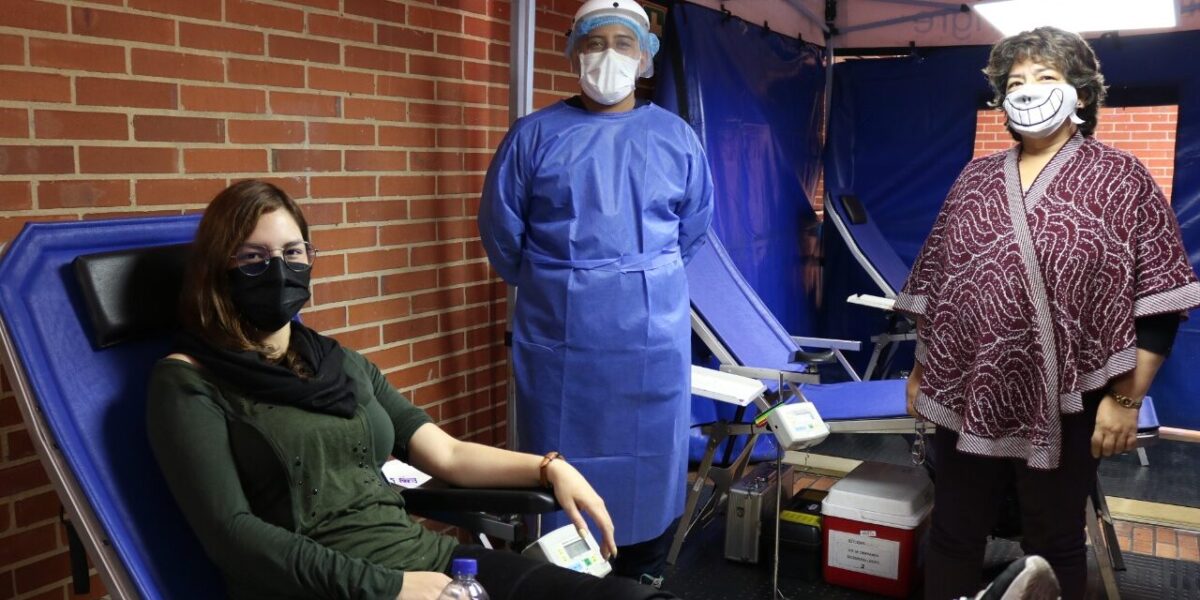
Given the prevention measures taken in recent days in the city, some guidelines have been taken into account to maintain the supply of blood and blood components to the hospital network of the capital. One of them is the realization of blood donation days with strict biosecurity protocols.

Blood and blood components are essential biological products to guarantee permanent transfusions to patients (oncohematological, maternal, ICU, pediatric, renal, cancer and trauma) who require them throughout the city's hospital network.

The collection of blood components will take place in residential complexes and the fixed point of the District Blood Bank IDCBIS, located in the District Health Secretariat. Mobile units will move to mobilize duly identified blood bank personnel, as well as the transfer of donors to donation sites.

The general population is urged to carry out a previous registration to be contacted and to be able to coordinate the logistics to make the donation with all the biosecurity measures. The reactivation of the city also allowed the different hospitals to call for surgeries, which has doubled the need for blood components.

"The blood that is donated does not have a price, it has a value: life itself", says Dr. Bernardo Camacho, director of the District Institute of Science, Biotechnology and Innovation in Health, who asks for the solidarity of Bogota residents between 18 and 65 years of age in good health. Patients in different clinical situations require blood components as a priority to improve their health or save their lives.

Donation requirements are very simple
1. Present an identification document.
2. Be between 18 and 65 years old.
3. Be in good health for the last 15 days.
4. Minimum weight 50 kilos.
5. Not having suffered from hepatitis after the age of 10 years.
6. If you have tattoos, permanent makeup or piercings that have been applied more than 6 months ago.
7. Not having ingested antiparasitics in the last 30 days.
8. Not having ingested antibiotics in the last 15 days.
9. Not be pregnant.
10. If you are breastfeeding your son or daughter is older than one year.

tratamiento-para-cornea-1200x600.jpg

10 September, 2020 InvestigationNewsof Tissue

The District Tissue Bank IDCBIS (District Institute of Science, Biotechnology and Innovation in Health) in collaboration with the Advanced Therapies Unit is leading a research project that could help people who have suffered severe alterations in their corneas to recover, especially if they have suffered burns or severe allergies, such as Steven-Johnson syndrome.

The research line is in its first phase and its main objective is to advance in the culture of limbal cells, a type of cell capable of self-renewing and regenerating the corneal epithelium.

Mauricio Latorre, medical director of ocular tissue at the IDCBIS District Tissue Bank, states that any person who has deficiencies at the corneal limbus level could benefit from this treatment and, if proven effective, the patient would not have to rely on amniotic membrane grafts or chemical medications to counteract his condition and could instead have access to direct cell recovery that would prevent further deterioration.

You may be interested in: Medicinal mesenchymal cells that could help in the treatment of diseases such as arthritis

Currently, an alternative for people with adverse conditions in the corneas is transplantation, a solution that despite the cultural change that has been seen in Colombia in recent years in terms of tissue donation, is still limited in part by the proliferation of myths, this accentuated with the pandemic that forced medical personnel to increase the selection criteria for potential donors and extreme epidemiological measures and tests to ensure the biosafety of each of the potential tissues for transplantation.

Dr. Latorre explained that although the research is at an early stage, the results obtained so far are promising.


delegacion-de-investigadores-de-lazio-italia-visita-al-idcbis-1200x600.jpg

8 September, 2020 InvestigationNews

Continuing with the exercise of the continuous search for international scientific cooperation and thus strengthen knowledge networks with experts in different areas of knowledge, we have received the delegation of the mission of Lazio - Italy in Bogota, who learned firsthand the research capabilities and projects led by IDCBIS.

These initiatives are possible because the IDCBIS is registered as a flagship project of Bogota and is part of the Biopolo area of the Smart Specialization Strategy of the Bogota Chamber of Commerce.

The Smart Specialization of the Bogota Region is an integrated agenda for productive development built collectively for the transformation of Bogota and Cundinamarca based on knowledge and innovation. A dynamic strategy that responds to regional capabilities and international trends for the generation of projects.

Five areas were prioritized for its implementation, made up of a set of productive activities, some of them consolidated and others barely emerging: Bogota Creative Region, Bio-pole, Business Services, Advanced Knowledge HUB and Sustainable City Region.

The IDCBIS is part of the group called Bio-pole, which refers to the development of life sciences, including technologies and productive activities pertaining to agriculture and agro-industry, fine chemistry and health.


investigadores-del-idcbis-presentan-trabajo-cientifico-en-ingenieria-tisular-en-el-congreso-mundial-1200x600.png

7 September, 2020 CellsNews

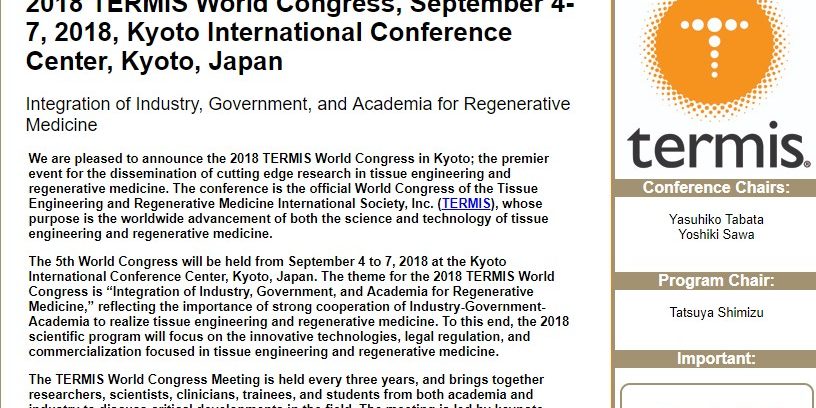
Dr. Ingrid Silva, PhD and Luz Stella Correa, PhD, Master Candidate in Genetics, are attending the TERMIS Society World Congress, which is being held in the city of Kyoto, Japan from September 4 to 7 of this year. The World Congress of the Tissue Engineering and Regenerative Medicine International Society (TERMIS) is the most important scientific event in the field of Tissue Engineering since it brings together researchers, academic and industry sectors, world leaders in the development of advanced therapies oriented to tissue regeneration.


70-000-cm2-de-piel-estan-disponibles-para-pacientes-quemados-1200x600.jpg

7 September, 2020 Newsof Tissue

IDCBIS District Tissue Bank has the largest availability of skin in Latin America to care for burn patients.

Bogotá D. C., August 13, 2018. The District Tissue Bank of the District Institute of Science, Biotechnology and Innovation in Health -IDCBIS-, linked to the District Health Secretariat, has 70,000 cm2 available to benefit the most vulnerable population that has suffered burns by flame, boiling liquid, acid and electricity.


investigadores-del-idcbis-reciben-reconocimiento-por-descubrir.jpeg

7 September, 2020 CellsInvestigation

Considering that stem cell transplantation for blood diseases depends on several factors including the patient, the disease, the compatibility and the source of stem cells used, it is important to investigate the factors of the collection, isolation, freezing and thawing process to which these cells are subjected.

For the success of a stem cell transplant it is necessary firstly to have compatibility between donor and recipient, secondly it is necessary that the cells are sufficient according to the patient's weight and that they are in good condition after thawing (living stem cells).

The IDCBIS Public Cord Blood Bank with a scientific approach has been analyzing different variables that may allow improving the processes or identifying characteristics of the cord blood units that allow predicting the success of the transplant.

The umbilical cord blood units collected from altruistic donors in the district are processed in the bank until they are frozen for storage, performing analysis on tissue compatibility molecules, among other analyses.

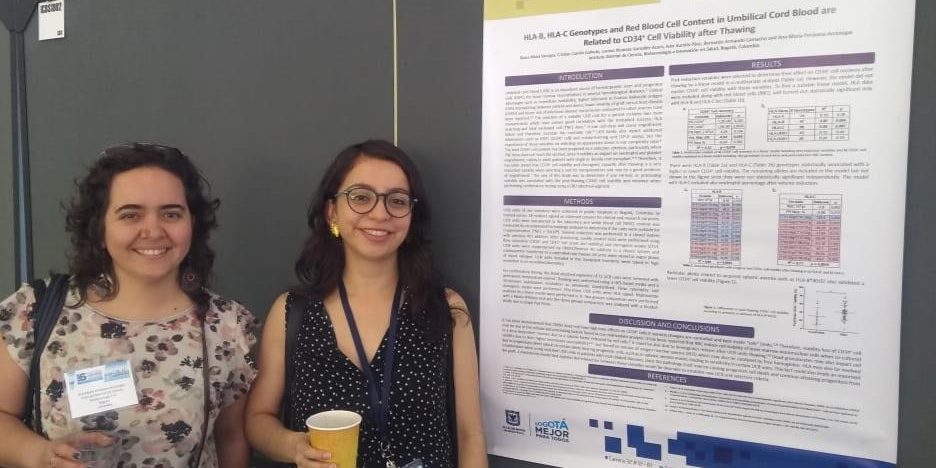
The finding was awarded by the scientific committee of 16th International Cord Blood Symposium was that removing red blood cells from cord blood units could improve the quality of stem cells for transplantation.

The committee also considered very novel the finding that certain genetic variants present in donors predispose to a better or worse quality of cord blood units, which would allow to choose them before transplantation and avoid transplant failures.

These results were presented by IDCBIS researchers, Dr. Ana María Perdomo Arciniegas and Dr. Diana Vanegas, who represented the Bank's group of researchers, presented the research and resolved the concerns of the most important scientists in the area.


servicio-de-irradiacion-de-componentes-sanguineos-idcbis-1200x600.jpg

7 September, 2020 Newsof Blood

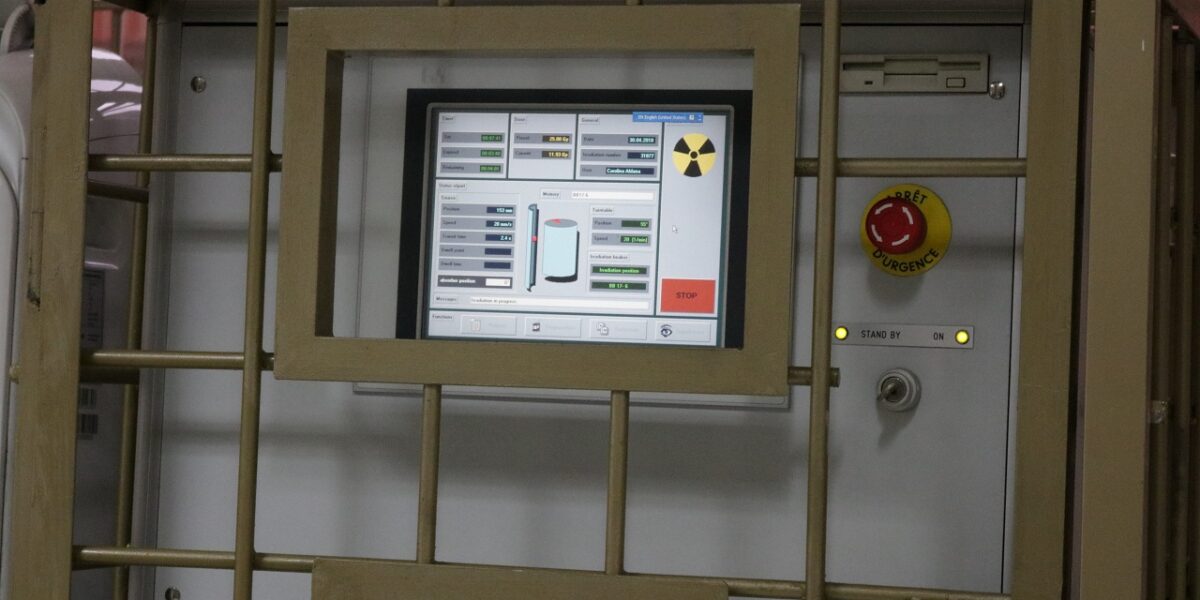
The IDCBIS District Blood Bank offers the service of irradiation of blood components, which consists of a treatment that is done by gamma radiation to red blood cells, platelets, single platelet concentrates (CUPs) and plasma, in order to inactivate the T lymphocytes present in these blood components and prevent Graft Vs. Host Disease (GVHD) in the recipient.


Optimal applications for the use of gamma irradiation are:

-Bone marrow transplant patients

-Patients with Hodgkin's disease

-Neonatal transfusion

-Immunosuppressed patients.

-Oncology patients

The IDCBIS District Blood Bank is the only one with specialized equipment for the irradiation of blood components and tissues using gamma irradiation with Cesium-137 with an optimal distribution of the dose throughout the blood component, which ensures that T lymphocytes do not proliferate.

The blood component irradiation service is provided 24 hours a day, 365 days a year to public and private institutions in Colombia.


servicio-de-laboratorio-de-inmunohematologia-1200x600.jpg

7 September, 2020 Newsof Blood

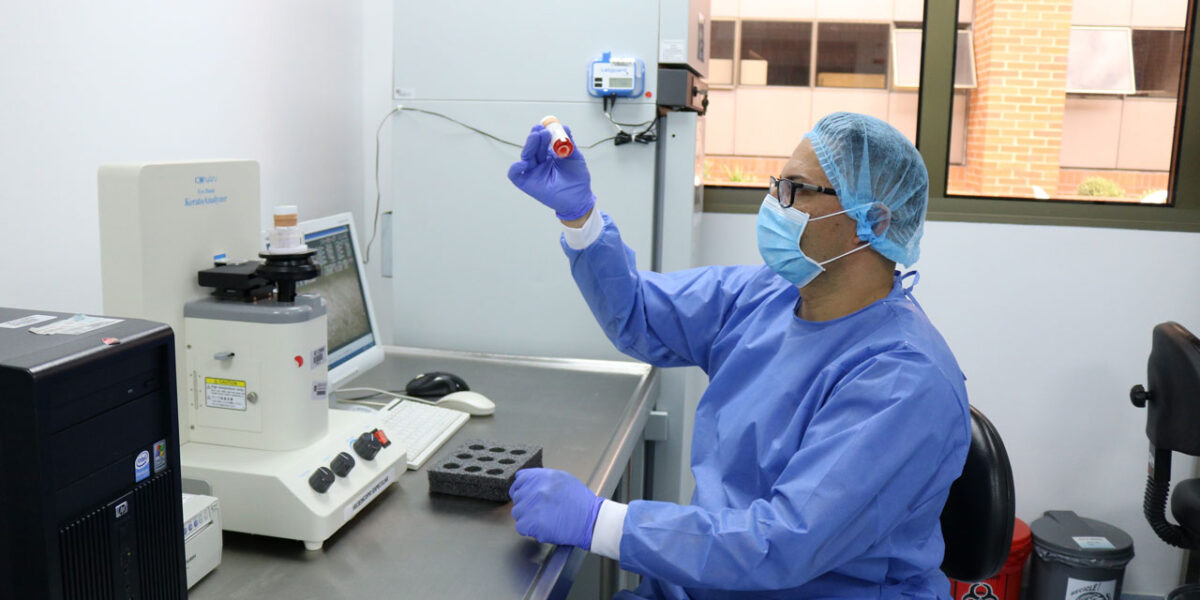
The IDCBIS immunohematology laboratory performs the processing of the tests established by current legislation for blood donor samples and apheresis in fully automated platforms favoring a simple, fast, reliable and safe set-up.

Immunohematology referral service to all public institutions in the District and private institutions:

-Resolution of erythrocyte compatibilization cases.

-Extended studies for the diagnosis of autoimmune hemolytic anemia

-Support studies for the diagnosis and prevention of hemolytic disease of the fetus and newborn.

Tests for the identification of irregular antibodies, including allogeneic adsorption techniques, differential adsorption, differential adsorption with enzyme-treated red blood cells, among others.

It also has specialized professionals with extensive experience in the area, with postgraduate degrees and teaching experience, which has positioned the service as a training center for immunohematology with a clinical approach for residents of hematology, pediatric and adult hemato-oncology programs of the National University of Colombia and the University Foundation of Health Sciences - FUCS.

His research activities include the implementation of erythrocyte genotyping techniques, registration of donors with rare phenotypes and study of blood group system frequencies.

The Immunohematology service is provided 24 hours a day, 365 days a year to public and private institutions in Colombia.


reconocimiento-a-la-investigacion-cientifica-del-idcbis.jpg

7 September, 2020 NewsAwards

IDCBIS will be presenting the Abstract "Tissue Engineered Constructs Based on Mesenchymal Stromal Cells and Acellular Dermis induce the Release of Repair Factors for Cutaneous Lesions "at the 5th World Congress of the Tissue Engineering and Regenerative Medicine in Tokyo -Japan #Termis2018. This is a great recognition to the research work of Dr. Gustavo Salguero, Dr. Ingrid Silva and the entire team of the Advanced Therapies Unit.


Logo a color IDCBIS Centro de investigación reconocido por minciencias r-1763-2021

PASIÓN POR LA CIENCIA Y LA VIDA


en_USEnglish
Pago rápido
Pague sus facturas aquí.
Skip to content